


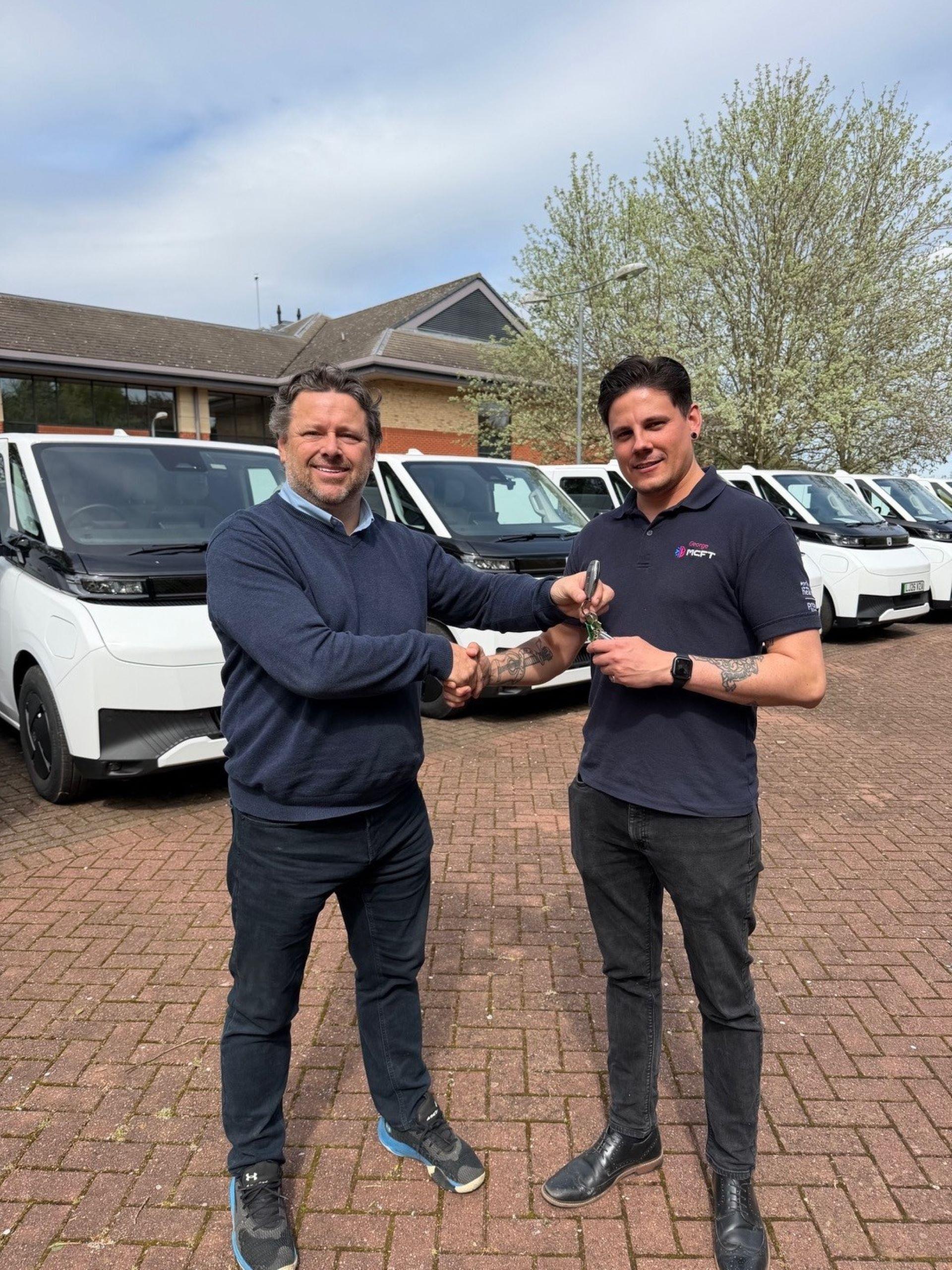
Global commercial kitchen maintenance specialist MCFT has taken a decisive step in its electrification journey, placing an order for 20 all-electric vans following a rigorous multi-brand evaluation that placed the Farizon SV firmly ahead of its established rivals.
The fleet deal marks a significant milestone not only for MCFT’s operational strategy but also for the growing adoption of electric light commercial vehicles across demanding, high-mileage service sectors. After an extensive assessment process spanning four locations and involving hands-on trials by service engineers, the Farizon SV emerged as the preferred choice, outperforming three competing fully electric vans from well-known manufacturers across key operational criteria.
MCFT’s engineers, who routinely travel across London and surrounding areas delivering maintenance services and new equipment to commercial kitchens, placed particular emphasis on real-world usability. Load capacity, range confidence, accessibility, and day-to-day practicality were all closely scrutinised over a full month of testing. The SV’s combination of generous cargo space, strong payload capability, and ease of loading proved decisive in its selection.
Supplied through Heathrow Van Centre, the chosen specification is the SV L1H1 83 kWh model, which delivers up to 234 miles (WLTP Combined) from its battery and supports rapid charging from 20 to 80 per cent in as little as 36 minutes. Each van will also be professionally fitted with bespoke racking solutions by Van Racking Solutions, ensuring MCFT’s engineers can operate efficiently with fully optimised mobile workshops on board.
The operational role of the new fleet is central to MCFT’s service delivery model. The vans will be deployed by Catering and Refrigeration Engineers tasked with both scheduled maintenance and urgent repairs, as well as the delivery of commercial kitchen equipment nationwide. With engineers often covering up to 25,000 miles annually, efficiency and uptime were critical factors in the procurement decision.
At the heart of MCFT’s strategy is a commitment to sustainability without compromising performance. As the commercial vehicle sector transitions toward electrification, the business sees electric vans as a way to enhance operational capability while reducing environmental impact across its global service footprint.
Commenting on the decision, MCFT leadership highlighted both the environmental and operational benefits of the switch. The introduction of the Farizon SV fleet is expected to improve efficiency across service routes while supporting the company’s broader sustainability objectives. The balance of payload, range, and specification was seen as a defining advantage in meeting the demanding needs of its engineering teams.
From a supplier perspective, the deal also underscores growing confidence in emerging electric van manufacturers. Farizon Auto UK views the agreement as evidence of accelerating fleet interest in next-generation electric platforms designed specifically for commercial use cases rather than adapted legacy designs.
The Farizon SV itself brings a suite of advanced technologies into the segment, including drive-by-wire architecture and cell-to-pack battery integration, engineered to maximise interior space and efficiency. It also offers a five-star Euro NCAP safety rating alongside a high level of standard specification, including heated seating, a multifunction steering wheel, a 360-degree camera system, and advanced driver assistance systems.
Higher specification variants further enhance usability with features such as payload monitoring, vehicle-to-load functionality, and heated windscreen capability, reinforcing the SV’s positioning as a purpose-built commercial tool rather than a conventional electric adaptation.
With the SV line-up priced from approximately £39,000 plus VAT and offering multiple battery configurations, the platform continues to gain traction among fleet operators seeking a balance of cost control, capability, and sustainability. For MCFT, the decision represents both a practical upgrade and a long-term investment in an evolving service landscape where electric mobility is rapidly becoming the standard rather than the exception.