


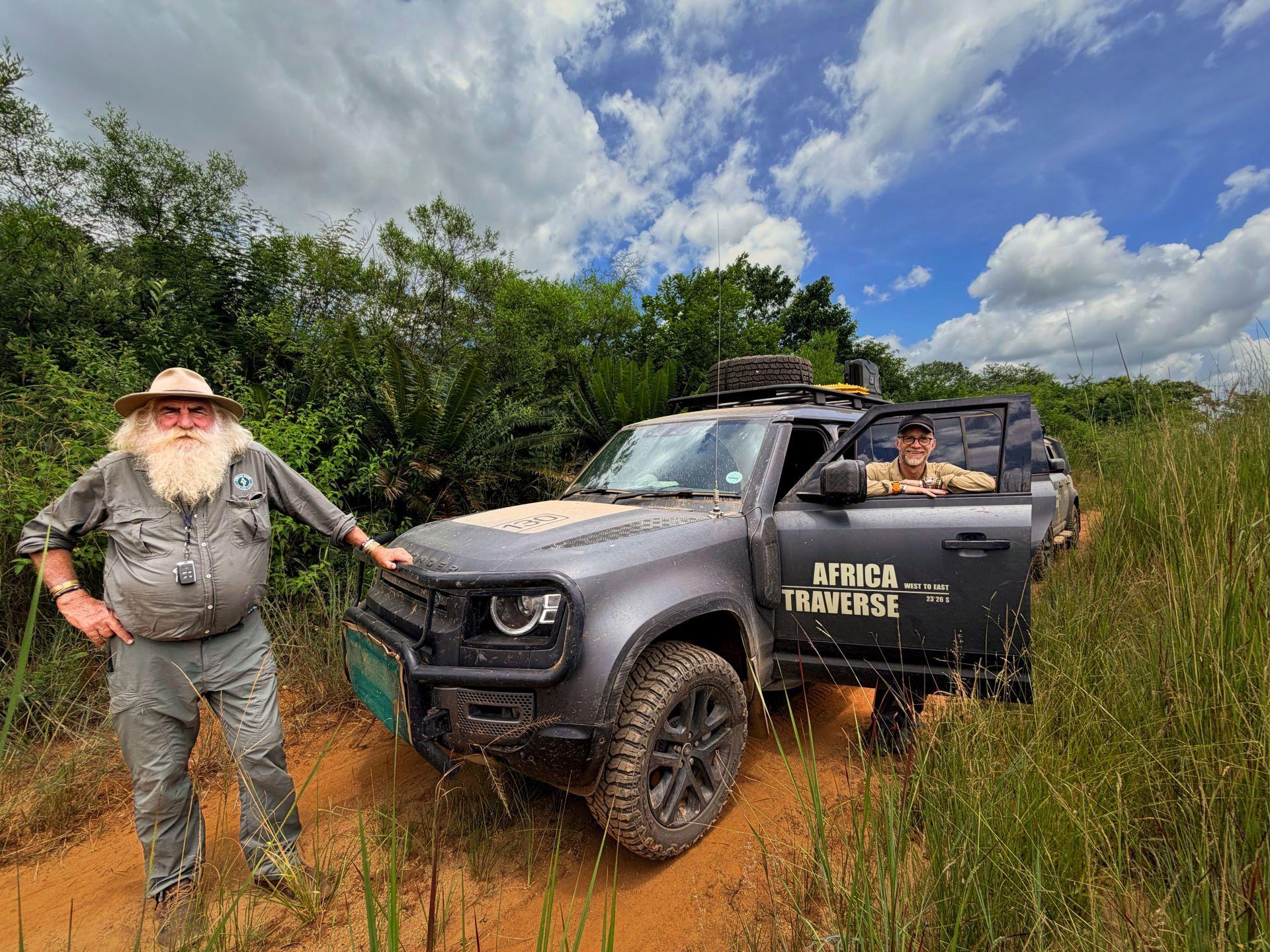
The Kingsley Holgate Foundation has brought its 43rd geographic and humanitarian expedition to a close, completing a remarkable 14,200km Africa Traverse that followed the Tropic of Capricorn across the breadth of southern Africa. The journey, which began on the Atlantic coast of Namibia in January and ended on the Indian Ocean shores of Mozambique in April, marks both a full-circle return to one of the Foundation’s most iconic routes and 25 years of partnership with Defender.
More than a test of endurance, Africa Traverse was a living continuation of an odyssey first undertaken a quarter-century ago when Kingsley and Ross Holgate traced the same latitude around the globe. This year’s expedition revisited the African leg of that original voyage, threading through Namibia, Botswana, South Africa and Mozambique while blending exploration, remembrance and urgent humanitarian action.
The team travelled in a fleet of rugged Defender vehicles, including two Defender 130s named Moyo and Isibindi, alongside a Defender 110 Puma known as Kaptein and a classic Defender Tdi called Mashozi. Each vehicle played a critical role in navigating some of the continent’s most punishing environments, from desert dunes to flood-ravaged lowlands, reinforcing the long-standing synergy between mechanical resilience and field-based humanitarian work.
For expedition leader Ross Holgate, the journey carried deep personal resonance. Returning to the same landscapes he once crossed with his father, he reflected on both continuity and transformation, noting how modern terrain response systems now complement the raw determination and analogue navigation of earlier expeditions. The contrast between past and present underscored a broader theme of evolution without departure from purpose.
That purpose was most evident in the Foundation’s humanitarian programmes, which remained central throughout the 14,200km journey. Under the Right to Sight initiative, the team distributed corrective spectacles to elderly villagers in remote communities, restoring vision and dignity in areas where access to healthcare remains limited. Alongside this, the Foundation’s conservation education programme continued its continent-wide impact, now reaching more than 700,000 learners and reinforcing long-term environmental awareness among Africa’s youth.
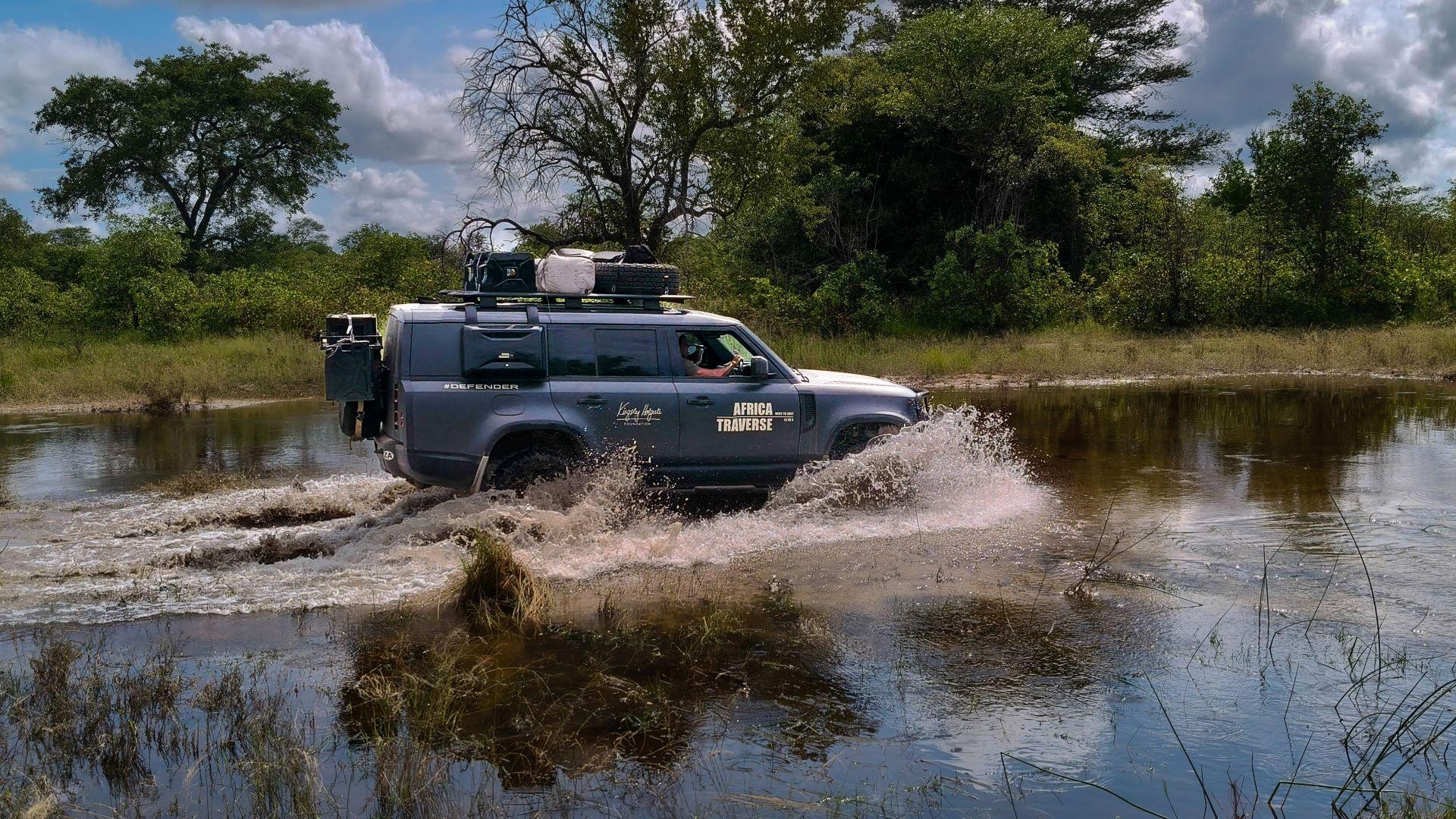
As the expedition reached Mozambique, its most urgent mission came into sharp focus. Severe flooding had intensified an already escalating malaria crisis, with conditions on the ground described as increasingly severe. Working in isolated communities cut off by damaged infrastructure, the team delivered long-lasting insecticide-treated mosquito nets to pregnant women and families with young children, using the Defenders’ exceptional off-road capability and wading depth to access areas otherwise unreachable.
The route itself tested both machine and crew across some of Africa’s most demanding terrain. The Namib’s towering dunes demanded sustained power delivery and precision control, while the Kalahari presented a complex mix of narrow tracks and unstable salt pans. In Mozambique, floodwaters transformed roads into mud-choked channels, forcing careful navigation around collapsed bridges and submerged infrastructure.
According to Defender Brand Manager Janico Dannhauser, the expedition reinforces the deeper meaning behind capability. The vehicles are designed for extreme conditions, yet their true value is revealed when they enable access to communities in need, turning engineering into impact and mobility into humanitarian reach. The 25-year collaboration between Defender and the Kingsley Holgate Foundation, he noted, represents not just endurance in distance travelled, but in lives supported and outcomes achieved.
The expedition concluded on the Mozambique coast with a traditional ceremony that echoed the journey’s symbolic arc. The expedition calabash, filled with Atlantic seawater at the outset, was carried across the continent and finally emptied into the Indian Ocean. In that moment, saltwater met saltwater once again, marking the completion of the 43rd expedition and the continuation of a partnership defined by purpose, resilience and shared commitment to Africa’s communities.