


In a groundbreaking effort to revolutionize the electric vehicle (EV) industry and support the UK’s journey to net zero, the V2VNY project is pioneering the next generation of vehicle-to-grid (V2G) technology. This innovative trial is focused on workplace and domestic EV charging, leveraging AC (alternating current) charging to make V2G more cost-effective and accessible for fleet operators, businesses, and individual EV owners.
A Game-Changer for the Future of Energy Management
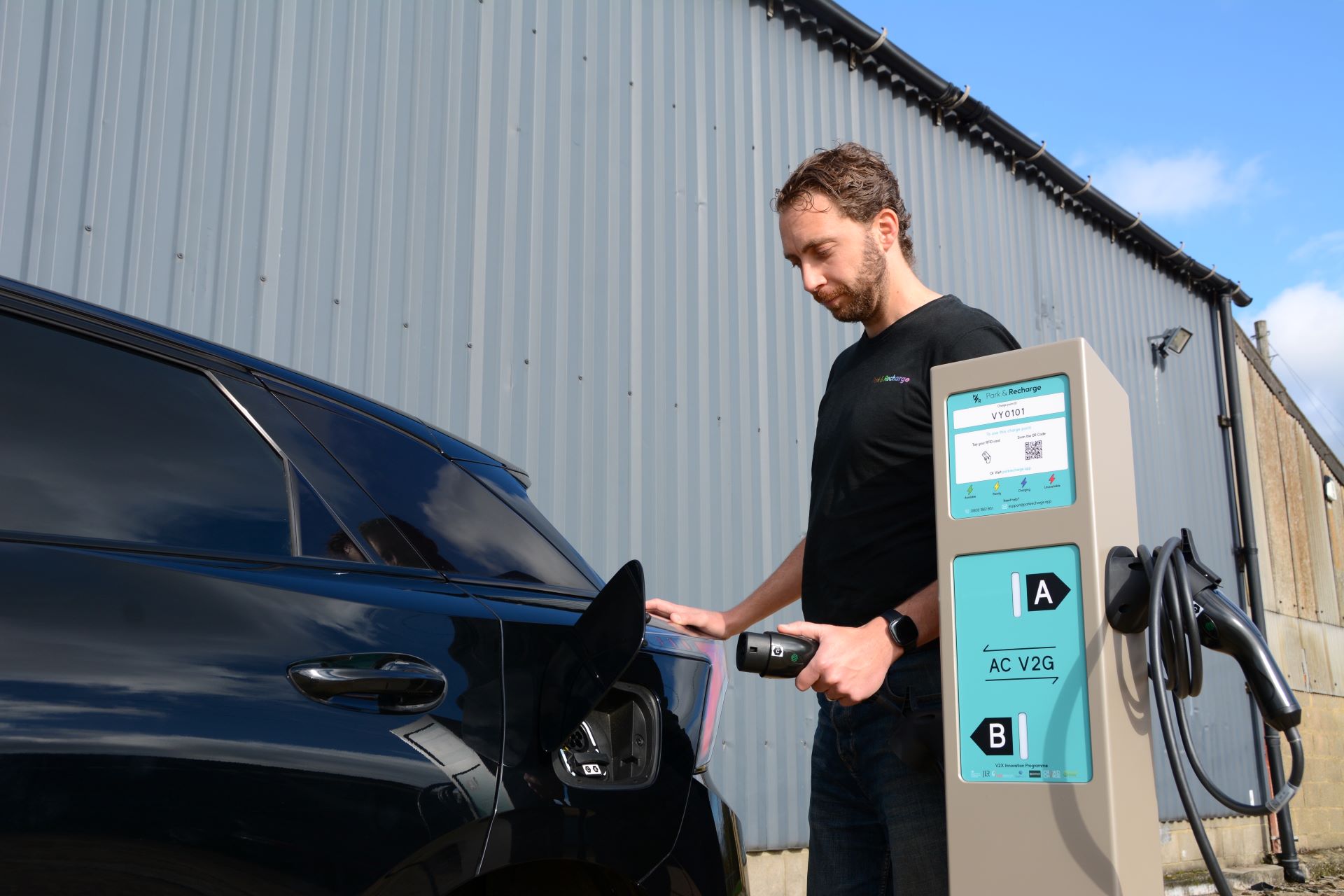
Traditional V2G technology has primarily used DC (direct current) chargers, such as those found in the CHAdeMO system, featured in models like the Nissan LEAF. However, the V2VNY project is testing a different approach by utilizing AC bidirectional charging, which synchronizes more efficiently with the electricity grid, making it an ideal solution for lower power settings. Not only does AC charging significantly reduce the cost of the necessary equipment, but it also suits workplace and domestic environments, where high-powered DC infrastructure can be prohibitively expensive.
With over one million EVs on UK roads—and this number steadily climbing—these vehicles represent an untapped source of mobile energy storage. The V2VNY project aims to unlock this potential, allowing EV batteries to store renewable energy during off-peak hours and return it to the grid when demand is high. This could ease the strain on the national grid and lower both energy costs and carbon emissions.
How AC V2G Technology Works
Vehicle-to-grid charging enables EVs to draw energy from the grid when prices are low and feed it back at times of high demand. This capability turns EVs into mobile energy hubs, or “mini power plants,” as described by Mike Potter, CEO of CrowdCharge, one of the key partners in the V2VNY project. Fleet and business owners can not only reduce their electricity costs but also contribute to a more balanced and sustainable energy system.
The V2VNY project is also trialling V2X (Vehicle to Everything) technology, which extends V2G’s benefits to include energy transfers between vehicles and buildings. This offers businesses a flexible way to manage energy consumption and costs, particularly during peak periods when energy prices soar.
Moving Beyond CHAdeMO: The Future of V2G
Until now, V2G has been closely associated with CHAdeMO, but the future lies with CCS (Combined Charging System), which is quickly becoming the standard for most new EVs. The V2VNY trial is ahead of the curve, using AC charging to demonstrate that bi-directional energy flow can be achieved at a fraction of the cost, making V2G more feasible for a wider range of vehicles and settings.
By 2025, standards are expected to ensure that CCS technology is fully compatible with V2G, opening the door to a vast array of newer EV models that can support these energy exchanges. In the meantime, V2VNY participants will benefit from free AC V2G chargers, provided they have compatible vehicles, such as the Hyundai IONIQ 5, Kia EV6, or MG ZS.
A Key Step Toward a Net-Zero Future
V2G technology is widely seen as a pivotal element in the UK’s transition to net zero. By using the collective storage power of EVs to supply the grid at peak times, businesses and homeowners can reduce their reliance on fossil fuels and help integrate renewable energy sources more effectively.
With its lower cost, high efficiency, and potential to significantly reduce energy consumption, the V2VNY project represents a key step forward in this evolution. As the project progresses through its trial phase, which runs until March 2025, it could serve as a blueprint for scaling up AC-powered V2G across the UK, ensuring that EVs play a central role in sustainable energy management.
A Collaborative Effort with Industry Leaders
The V2VNY project is led by Hangar 19, in collaboration with CrowdCharge, DriveElectric, Electric Corby, Oxfordshire County Council, Grid Beyond, and JLR, which is providing prototype electric vehicles for the trial. Supported by the Department for Energy Security and Net Zero (DESNZ) and funded through Innovate UK’s V2X Innovation Programme, this project is part of the broader £1 billion Net Zero Innovation Portfolio, specifically targeting up to £65 million for energy flexibility projects.
As the UK looks to ramp up its renewable energy capacity and reduce carbon emissions, the success of the V2VNY project could be a turning point in how electric vehicles are not just used for transportation but also harnessed as a dynamic tool for energy storage and distribution.
For more information on this groundbreaking initiative, visit CrowdCharge’s V2VNY page.